
Binder layouts
How do you plan a 3x3 card binder so the spreads look right?
The spread rule, page math for four real sets, and where to leave the gaps on nine-pocket pages.
By Matt Kellar — Founder · Published · Updated
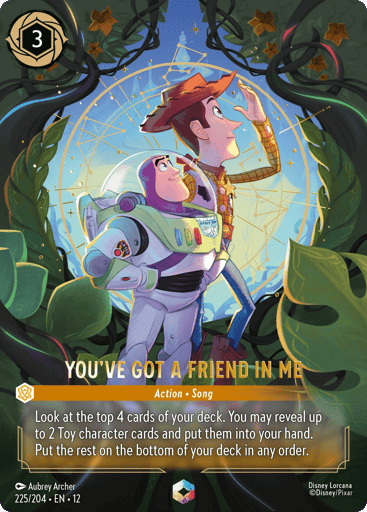
You finish sleeving a set into a 3 by 3 card binder, flip back through it, and something looks off: the set starts on a left-hand page, one lonely card sits on the last side, the best cards are split across two spreads. The fix is to plan in spreads of eighteen cards, not pages of nine, and to count before you sleeve. Here is how, with the page math for four real sets.
Nine is a friendly number. It makes rows of three, it divides a lot of set sizes cleanly, and it is what most binder pages are built around. That is also why small planning mistakes show so clearly.
Think in spreads, not pages
When a binder is open you never look at one page. You look at two sides facing each other, eighteen cards at once. That spread is what people see when they flip through, so plan around it.
The one rule to remember: the first side after the front cover is a right-hand page on its own. Everything after that pairs up. Side 2 faces side 3, side 4 faces side 5, and so on. So any section that starts on an even-numbered side opens on a fresh spread. A section that starts on an odd-numbered side shares a spread with whatever came before it.
That is the whole trick. The rest is counting.
The page math for four real sets
Here is the count for four sets in our catalog, filed in one straight run of numbers on nine-pocket pages. A sheet has a front and a back, so two sides per sheet.
| Set | Cards in catalog | Sides | Empty pockets on last side | Sheets |
|---|---|---|---|---|
| Chaos Rising (Pokémon) | 122 | 14 | 4 | 7 |
| The Time Of Battle (One Piece) | 119 | 14 | 7 | 7 |
| Wilds Unknown (Lorcana) | 242 | 27 | 1 | 14 |
| Re:ZERO (Union Arena) | 146 | 17 | 7 | 9 |
Two things stand out. Wilds Unknown fills its last side almost perfectly but needs one extra sheet, so the back of the last sheet is blank. The Time Of Battle ends with seven empty pockets, so its last side looks nearly empty. Neither is wrong. But it is better to know before you buy pages than to find out with the last card in your hand.
Use blocks of eighteen
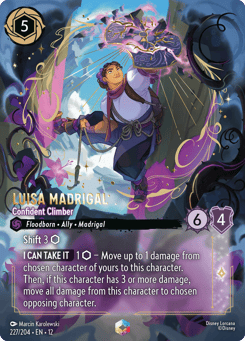
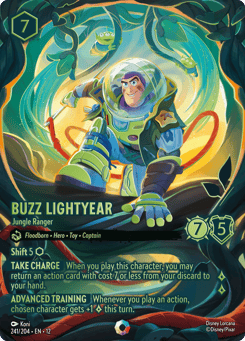
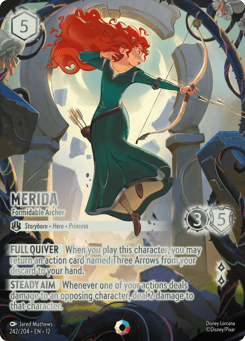
Some sets line up with the spread in a way that is worth using. In Wilds Unknown, the Epic cards run from 205 to 222 and the Enchanted cards from 223 to 240. Each block is exactly eighteen cards, which is one full spread.
If the main set is filed first, cards 001 to 204 fill 23 sides minus three pockets (204 cards over 207 slots). Start the Epics on side 24, an even side, and they get a spread to themselves on sides 24 and 25. The Enchanted cards take sides 26 and 27. The two Iconic cards, 241 and 242, start one more side. That costs you three empty pockets at the end of the main set. In return, every premium rarity opens on its own spread.
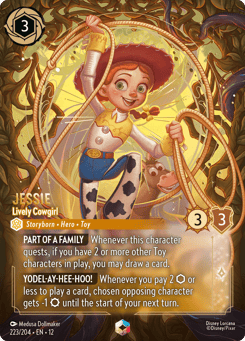
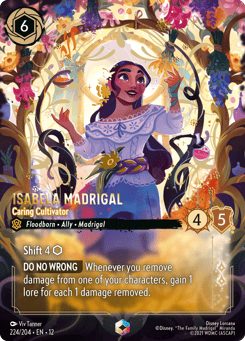


You can do the same check for any set. Find where each rarity block starts and ends in the numbering, count the cards in it, and see whether it lands on a multiple of nine or eighteen.
Rows of three are a design tool
A nine-pocket page is three rows of three, and rows are the easiest grouping to see. Use them for cards that belong together.
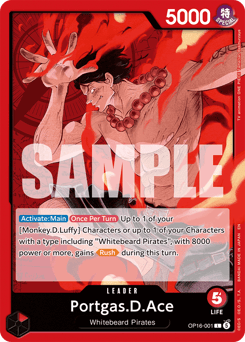
The Time Of Battle has six Leader cards, numbered 001, 022, 041, 060, 079 and 080. In number order they are scattered across five different sides. If you would rather see all the Leaders together, pull them to their own page: two full rows, with the third row free for the two Secret Rares, OP16-118 Portgas.D.Ace and OP16-119 Marshall.D.Teach. Both share a name with a Leader card, so the page reads as a set of pairs.


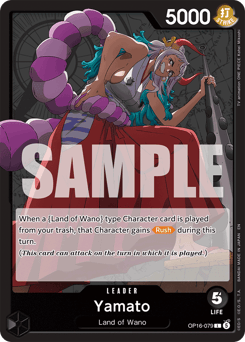
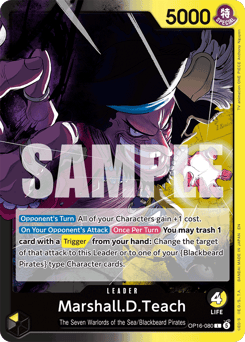
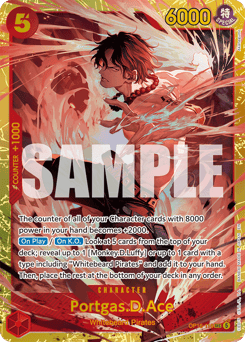
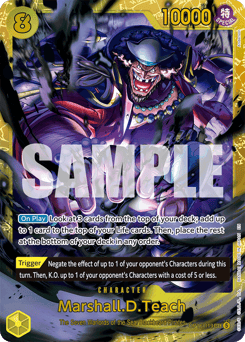
The cost is that the Leader slots in number order become gaps. Some collectors put a placeholder in each one. Others accept that this binder is curated rather than numbered.
Where to put the gaps
Every set has missing cards for a while, and every layout has spare pockets somewhere. You get to choose where they show.
- At the end of a section. This is the default and the least noticeable. Empty pockets at the bottom of the last page of the main set look intentional.
- In the slot of a missing card. This is the best habit for a set you are still completing. Every card has a fixed home, so you never reshuffle, and the gaps are your shopping list.
- Never at the top-left of a spread. That is where the eye lands first when a binder falls open. A gap there makes a finished page look unfinished.
Do the counting once, then never again
The planning above takes a few minutes with a calculator. It takes seconds if the binder already exists digitally. In 3Ring you pick nine-pocket pages, add the set, and see the real spreads, including where each rarity block lands and how many pockets are left. Then you move cards between layouts without touching a sleeve. The missing slots are tracked per binder, so the gaps in your plan become a checklist on your phone.
For the hardware side (why a ringless binder protects a set you have planned this carefully better than rings do), see our guide on what to use instead of a 3-ring binder. In a ringless binder the page count is fixed, which makes the counting above more useful, not less. For a full walkthrough of one set, see the Chaos Rising binder plan.
Frequently asked questions
How do I work out how many 9-pocket pages a set needs?
Divide the number of cards by nine and round up: that is the number of sides. Halve it and round up for sheets, since each sheet has a front and a back. Then check how many pockets are left on the last side.
Which side of the binder should a set start on?
The first side after the front cover is a right-hand page on its own. After that, a section that starts on an even-numbered side opens on a fresh spread.
Is a 9-pocket or a 12-pocket binder better?
Nine pockets is the standard for standard-size cards and the easiest to plan around, and spreads of eighteen are easy to plan around. Twelve pockets holds more per page but gives each card less room.
Sources
- Card counts and numbering for Chaos Rising, The Time Of Battle, Wilds Unknown and Re:ZERO: 3Ring catalog.
- The CORRECT Way To Store Pokemon Cards in a Binder, Deep Pocket Monster on YouTube: how to keep a binder from damaging the cards you planned so carefully.
- Cover image: "You've Got a Friend in Me" (Wilds Unknown, Enchanted), from the 3Ring catalog.